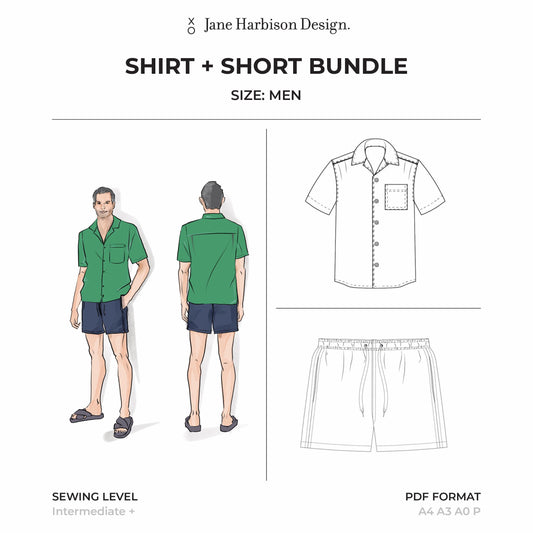
Choosing fabric is often the point where confident sewers hesitate — especially when sewing for men and boys.
Making sure the colours work together and most importantly work on you
These fabrics have been designed to be used with Jane Harbison Design sewing patterns, but you can use them for any project that takes your fancy.
All collections are designed with a colour pallete that suits a particular Colour Type so you know your finished garment will suit him.
All fabrics are available for purchase on Spoonflower. Take advantage of their regular sales.

The million dollar question
Will these fabrics suit him?
Spoiler alert: yes, yes they will.
Which fabric collection should I use?
The right fabric design tends to share a few common qualities:
-
Aligned with your Colour Type
The colours sit naturally with your skin tone, making the finished garment feel right the moment you wear it.
-
Works as part of a colour plan
It pairs easily with other fabrics and garments, helping you build outfits without second-guessing.
Spoonflower provide many fabric types and I always make suggestions in my sewing patterns.
-
Matches the purpose of the garment
The design suits where it will be worn whether that’s relaxed, everyday, or more refined occasions.
-
Feels good to sew and wear
The scale, pattern, and overall look give you confidence while sewing and satisfaction once it’s finished.
What Colour Type Am I?
I use four key elements to define your Colour Type:
| Element | Description |
|---|---|
| Undertone | Whether your skin has warm, cool, or neutral undertones. |
| Facial Contrast | The level of contrast between your skin, hair, and eyes. |
| Facial Depth | How light or dark your overall colouring appears. |
| Facial Chroma | Whether your features appear soft and muted or bright and clear. |
Fabric Collections are categorised by Warm, Cool + Neutral
I have 11 Colour Types in my Fabric Formula but for simplicity I have categorised the Fabric Collections into Warm, Cool and Neutral based around your Undertone.
Fabric Collections
Browse and click button to view the full collection on Spoonflower.
Please contact me for adjustments to scale so it is just right for you.
How much fabric for my pattern? - Fabric Requirements Here


colour type
Neutral
Space - Boy's clothing and home decor
Spoonflower Collection ID: 1361254

colour type
Neutral
Ocean - Boy's clothing and home decor
Spoonflower Collection ID: 566957

-
Season
-
Occasion
-
Style
How to order fabric from Spoonflower

Still can't decide?
When fabric choice feels overwhelming, return to the basics:
- Start with the season it is being worn
- Narrow by comfort and wearability
- Refine by style and occasion and colour
This approach keeps decisions practical and leads to garments that are worn and enjoyed.
Want something else?
Do you see something but the colour isn't quite right or you want to adjust the scale. Or maybe you have a jacket you want special lining for?
If you want fabric for boys or men: Contact me here to discuss options.
Frequently Asked Questions About Choosing Fabric for Menswear Sewing Projects
What is the easiest fabric to use when sewing for men?
Lightweight to medium-weight woven fabrics such as cotton, linen blends, and cotton twill are usually the easiest to work with. They are comfortable to wear, stable to cut and sew, and suit many menswear patterns.
What fabric works best for men’s shirts?
For most men’s shirts, breathable woven fabrics work best. Cotton poplin, cotton lawn, lightweight twill, linen, and linen blends are all reliable choices, depending on the season and how the shirt will be worn.
How do I choose fabric for sewing a gift for a man?
Start by thinking about when the garment will be worn, then refine by comfort and care. Fabrics that are comfortable against the skin, easy to wash, and suitable for everyday wear are more likely to be used and appreciated.
Should I choose fabric based on the pattern or the season first?
It’s usually easiest to start with the season, then check that the fabric suits the pattern. This avoids choosing fabric that looks good but feels uncomfortable or impractical once worn.
Are patterned fabrics harder to sew than solid colours?
Patterned fabrics aren’t harder to sew, but they may require extra fabric and care for pattern matching. Solid colours are often simpler for first menswear projects, while patterns can add interest once you’re comfortable with the construction.
So give yourself more time when cutting out patterned fabric so the pattern aligns when assembled.
What fabrics should I avoid when sewing for men?
Very stiff fabrics, overly synthetic fabrics, or fabrics that don’t suit the season can be uncomfortable to wear. If a fabric feels restrictive, scratchy, or difficult to care for, it’s less likely to become a regular part of the wardrobe.
Can the same fabric work across different patterns?
Yes. Many reliable menswear fabrics — particularly cottons, linens, and twills — can be used across shirts, shorts, and relaxed garments, making them practical choices for repeat sewing.
How do I avoid wasting money on the wrong fabric?
Keep your decision simple: start with the season, prioritise comfort and wearability, and choose fabrics that suit the wearer’s lifestyle. This reduces the risk of fabric being unused or garments going unworn.
If you haven’t chosen a sewing pattern yet, start with our guide to choosing your first menswear sewing pattern.
This + That